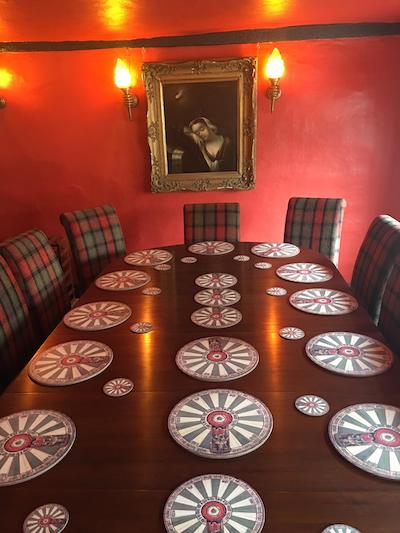
Lady Alice Lisle
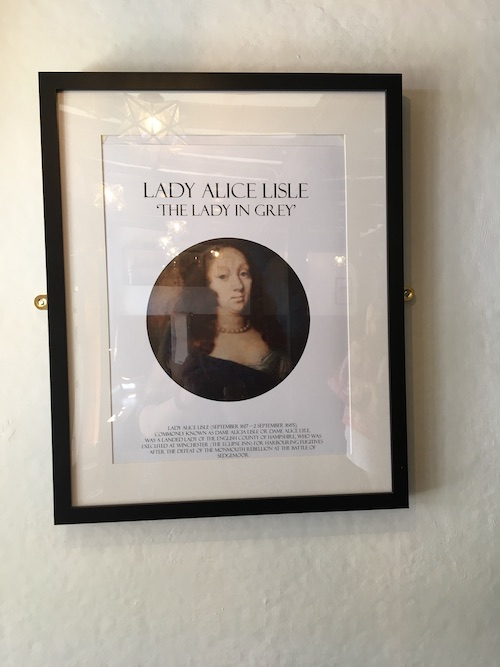
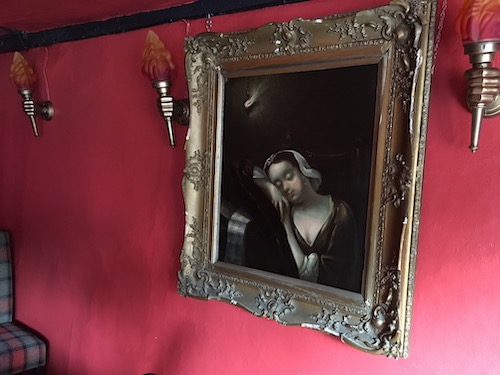
Lady Alice Lisle
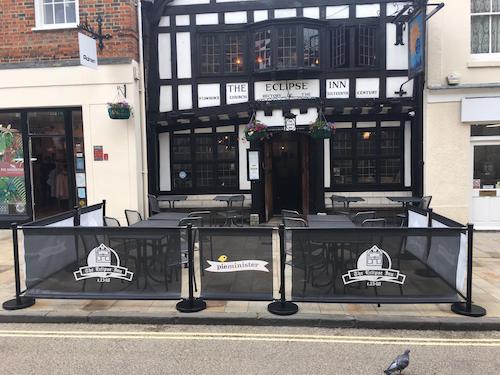
On 1st September 1685, a dignified Dame Alicia Lisle entered the building that is now The Eclipse Inn.
Escorted upstairs by armed guards, she spent her last night in fervent prayer
while her distraught family and friends waited outside in Winchester Market Place.
Sleep would have been hard to come by as hammering echoed around the square.
The following morning, 2nd September 1685, Lady Alicia stepped out from the upper window of the Eclipse
onto a hastily-constructed scaffold.
There, as the first ‘martyr’ of the hard-hearted Hanging Judge Jeffreys and his Bloody Assizes, she was beheaded.
Her crime? Lady Alice had provided Christian shelter to two refugees from the Battle of Sedgemoor which ended the Monmouth Rebellion.
Unknown to her, one of the men was a wanted fugitive, a traitor – and the punishment for sheltering traitors was death.
Judge Jeffreys wished to make an example of Lady Alice.
She was charged with harbouring the King’s enemies at her home, Moyles Court near Ringwood.
Taken first to Fisherton Gaol in Salisbury, she was held there for five weeks before being brought to Winchester and tried for treason.
Three times the jury in her trial found her innocent.
Judge Jeffreys insisted they review their verdict until, after great coercion, and probably in fear for their own lives,
they reluctantly agreed to the conclusion he had already decided upon: Lady Alice was guilty.
Sentenced to death, Judge Jeffreys sought to have her burned at the stake,
but she appealed successfully to King James II that as a gentlewoman she had the right to be beheaded – a swifter end.
He tried to have her dragged ignominously through the streets of Winchester on a hurdle to her place of execution,
but the clergy and citizens of Winchester objected vociferously.
So it was that she was beheaded outside The Eclipse Inn, to the despair of all who knew her.
Conveyed to its final resting place in Ellingham churchyard, Lady Alicia’s body was followed
by a mournful cortege of hundreds of ordinary men and women, walking silently in disapproval at her unjust fate.
Since then, Dame Alice Lisle has returned time and again to the timbered tavern where she spent that last troubled night.
Her sudden appearance has startled staff and customers alike as, clothed in a grey woollen dress,
she watches them silently from the dark recesses.
Her sad and solemn spectre is now regarded as nothing less than the oldest and most distinguished resident
of this atmospheric establishment [The Eclipse Inn] Haunted-Britain.com
The Haunted Pub Guide by Guy Lyon Playfair (1985), describes the ghost as a tall woman in a grey dress (‘the Grey Lady’)
with several members of staff reporting they had seen the apparition to three investigators looking into the case,
Jack Hallam, Alexander and Peter Underwood.
Apparently the ghost is responsible for ‘phantom nudging’ and, according to Peter Underwood, sounds associated
with the hurried construction of something wooden have been heard - perhaps the scaffold on which she was executed...
Nor is Dame Alicia's haunting confined to The Eclipse Inn.
According to Haunted England: A Survey of English Ghost Lore (1941) by Christina Hole,
‘Tradition says the sound of her silk dress and tapping of her heels were long afterwards heard in the corridors of Moyles Court,
and that sometimes she was seen passing down Ellingham Lane [from the churchyard]
in a driverless coach drawn by headless horses.’
And in Haunted England: The Penguin Book of Ghosts by Jennifer Westwood,
Hampshire villagers in the 1930s recalled encountering Lady Alice Lisle’s carriage
during their turn-of-the-century childhoods, but said the haunting seemed to have ceased by the 1930s:
‘One dark night when Mother and I was coming up Ellingham Lane, we heard wagon wheels a-rattlin’ behind us.
“Run, child” says Mother, “run to the side-long by Ellingham cross, lane’s too narrer for it ter pass.”
So us ran, all of a trimble, to the side-long, and Mother said “I allow t’will be Dame Lisle a-coming to Moyles from Ellingham Churchyard.”
So ‘twas – wagon passed us all a-rattlin’, drawed by four horses with never no heads and no driver, but inside wagon Dame Lisle was a-setting.
Horses knowed their way and rattled ‘cross high road and up backway to Moyles.
She must have got there, for they do say she were heard along the passages o’ the house;
and her high heels went tap-tap-tap and her silk dress went swish, swish, swish agen the bare floorboards.
But they don’t hear en nowadays. I allow it’s got sort o’ tired, wore out by time along.’